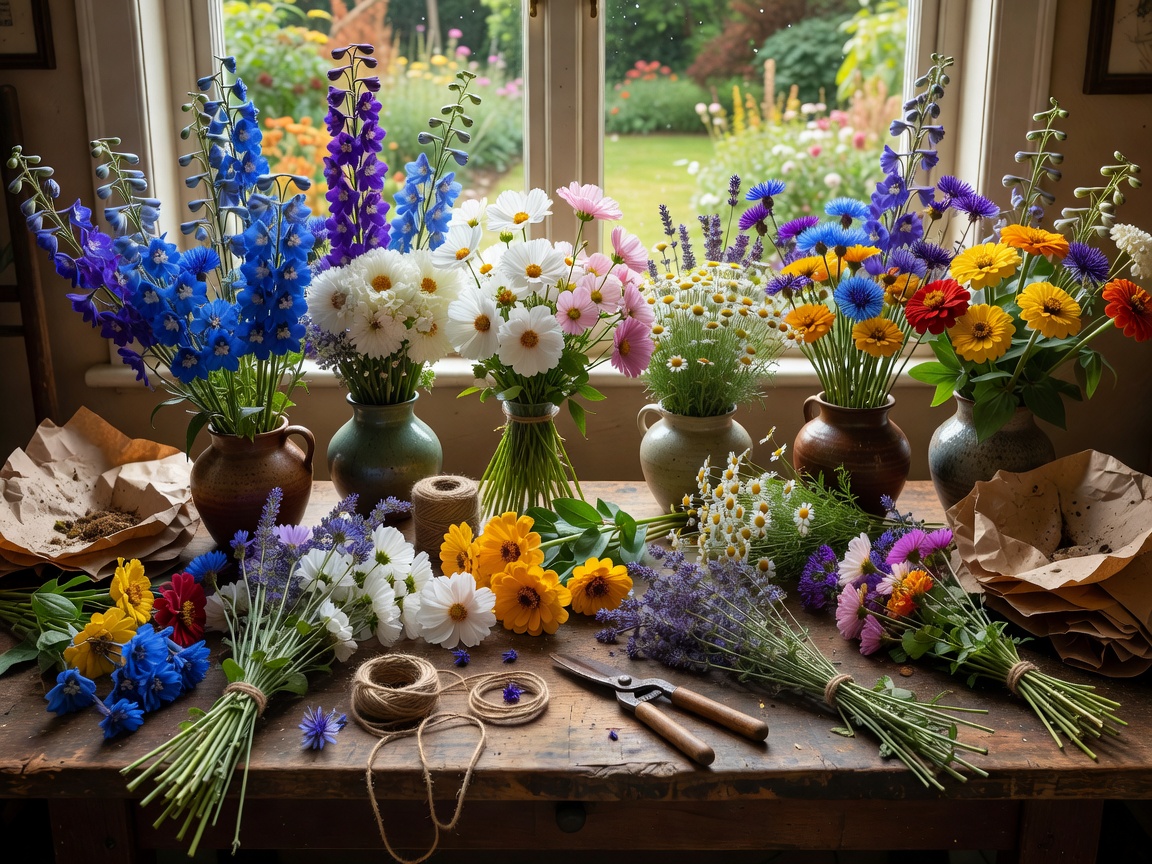
The Concept of 'Fleur Française'
In recent years, discerning Parisian florists and consumers have spearheaded a renaissance of domestic horticulture known as the Fleur Française movement. While global cargo transit permits hothouse varieties throughout winter, authentic Paris floral ateliers proudly rotate their stock around the French agricultural calendar. Purchasing flowers in sync with local harvests guarantees intense fragrance, longevity in room temperatures, and supports regional French growers in Brittany, the Var, and the Paris basin.
The Four Floral Seasons of Paris
1. Winter Transition: January to March
While the Parisian sky remains grey, market stalls ignite with vibrant yellow blooms. The golden sprays of Mimosa arrive from the Tanneron massif near Grasse, filling market awnings with powdery honey scents. By mid-February, deep jewel-toned Italian and Provencal Anemones and tissue-paper Ranunculus take center stage, followed swiftly by white narcissi and early forced lilacs.
2. The Spring Peak: April to June
Spring is Paris's most exuberant floral period. April introduces delicate sweet peas (pois de senteur) and French garden tulips with curved stems. By May, the French peony season (pivoines) arrives in full force, commencing with Coral Charm varieties and climaxing in June with lush Sarah Bernhardt varieties sourced from the Loire Valley. May also features the cherished Muguet (Lily of the Valley), sold on every street corner on May 1st for Fête du Travail.
3. Summer Bounty: July to September
High summer shifts the focus toward fragrant garden roses (roses de jardin), delphiniums, scabiosa, and sprawling dahlias. French florists favor unpruned, romantic stems that preserve natural curves rather than rigid, stiff greenhouse cuts. Hydrangeas from Normandy and Brittany exhibit deep blues and antique pinks as the months progress.
4. Autumn Still Life: October to December
Autumn brings rich, moody palettes favored by Parisian floral designers. Heirloom chrysanthemums, ornamental brassicas, rosehips, dark physalis lanterns, and copper beech branches fill market buckets. By December, stalls shift to aromatic silver fir, eucalyptus, and winter berries (ilex).
Seasonal Availability Matrix
| Flower Variety | Peak Months | Primary French Origin | Vase Life Profile |
|---|---|---|---|
| Mimosa | January – March | Var / Côte d'Azur | 4–6 days (best misted daily) |
| French Ranunculus | February – April | Hyères / Provence | 8–12 days (exceptional durability) |
| Loire Valley Peonies | May – June | Centre-Val de Loire | 5–7 days (keep away from heat) |
| French Garden Roses | June – September | Normandy & Île-de-France | 4–6 days (high fragrance) |
| Dahlias | August – October | Brittany & Seine-et-Marne | 6–8 days (trim stems at 45°) |
Atelier Care Guidelines: Maximizing Vase Life
To preserve fresh market cut stems in a hotel room or apartment during a stay in Paris, seasoned florists recommend three fundamental practices:
- The Clean Cut: Never use blunt household scissors, which crush vascular plant canals. Make a diagonal 45-degree cut using a sharp knife or dedicated garden shears.
- Foliage Stripping: Strip every leaf that would sit beneath the vase water level. Submerged foliage decays rapidly, multiplying bacterial counts and clogging stem intake.
- Cool Placement: Parisian radiator heat will cause delicate blooms like sweet peas or ranunculus to wilt prematurely. Position bouquets away from direct sunlight, drafts, and fruit bowls.